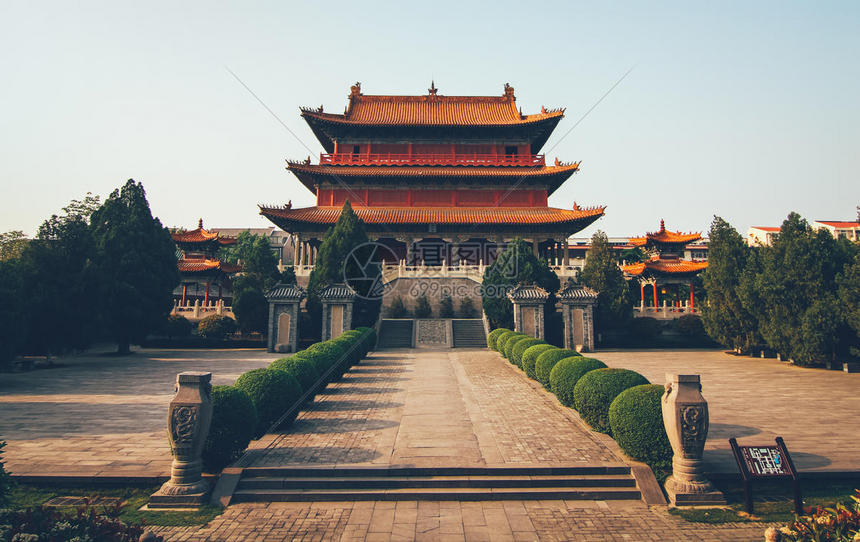
Zhoukou's place in Chinese history is defined by two legendary figures: Fu Xi and Laozi. According to ancient texts, Fu Xi, the first of the Three Sovereigns, taught the early Chinese people essential survival skills and created the Eight Trigrams at the site that is now the Taihao Mausoleum.
Laozi (c. 571-471 BC) was born in what is now Luyi County, Zhoukou. He served as a royal archivist during the Zhou Dynasty before departing through Hangu Pass (at modern Sanmenxia), where he composed the Tao Te Ching at the request of the pass keeper.
Throughout Chinese imperial history, Zhoukou remained an important agricultural center. The flat, fertile plains of eastern Henan supported intensive farming that supplied grain to the imperial capitals.
In modern times, Zhoukou has grown rapidly as a regional population and economic center. The city formally became a prefecture-level city in 2000, managing its vast population and coordinating agricultural production.
The Taihao Mausoleum temple fair, held annually in the second month of the lunar calendar, has been celebrated for over a thousand years and is recognized as a National Intangible Cultural Heritage.