
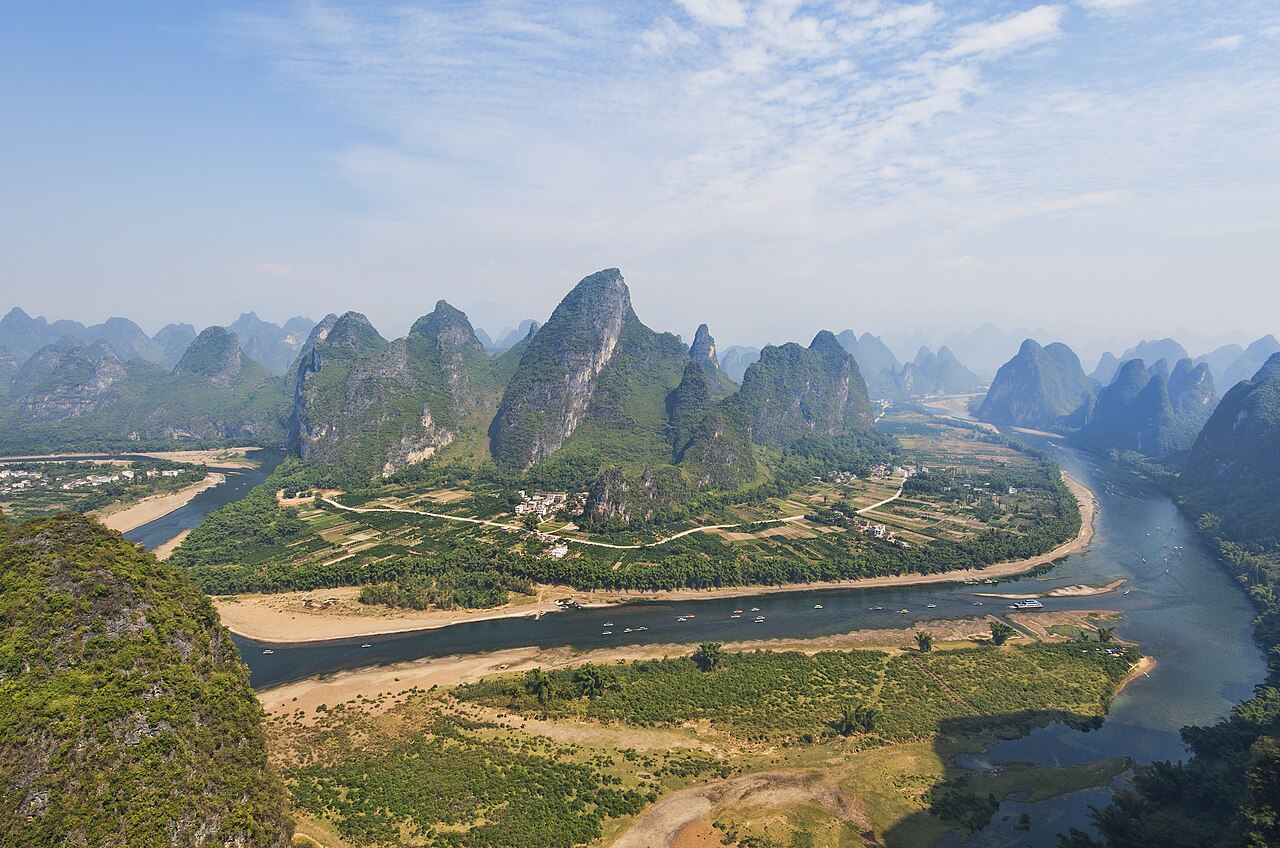
Guilin has been drawing travelers for centuries. The Chinese say "桂林山水甲天下" — "Guilin's scenery is the finest under heaven" — and after a day walking through this city, you'll understand why.
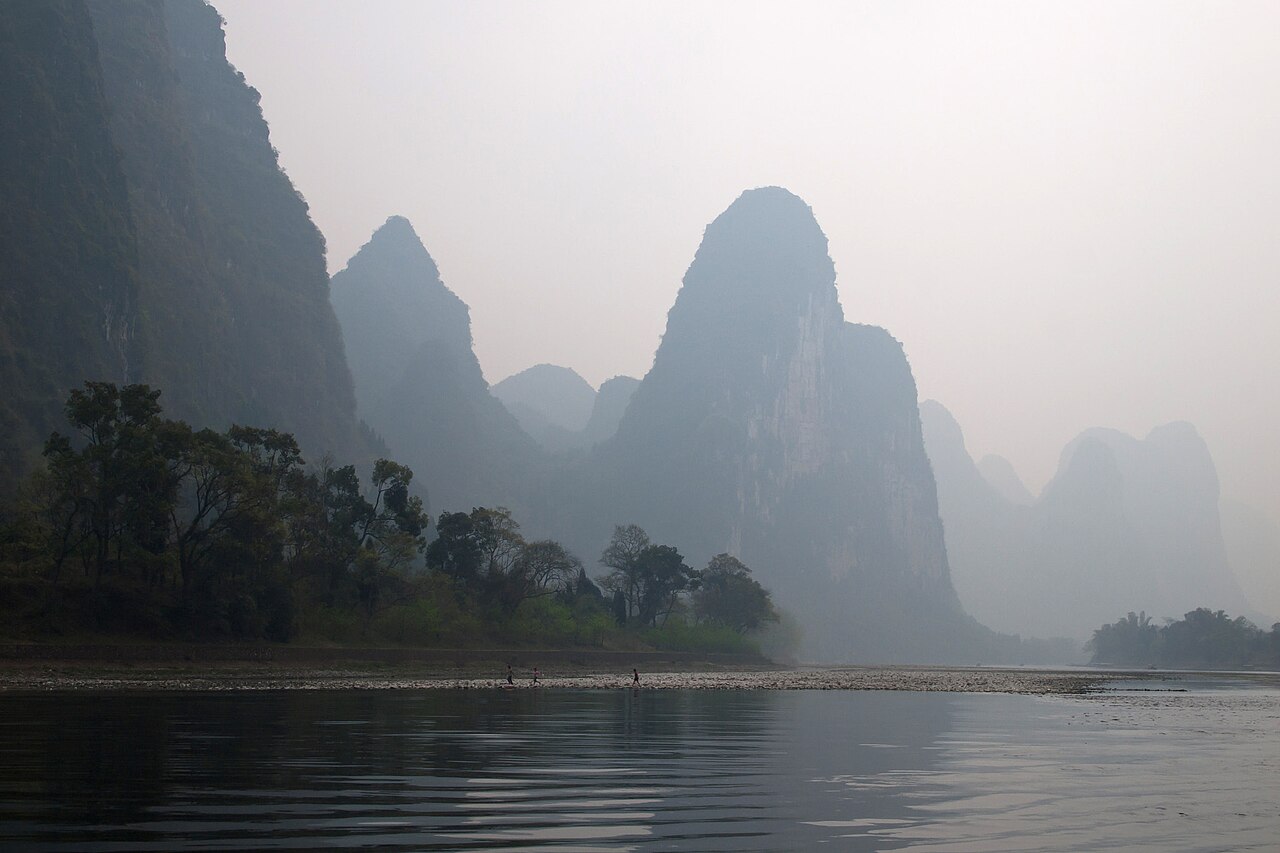
Unlike many Chinese cities that sprawl endlessly, Guilin is compact, walkable, and almost absurdly scenic. Karst limestone peaks rise straight out of the city like giant stone mushrooms. The Li River threads through downtown. Parks, lakes, and pagodas sit within easy walking distance of each other.
This guide covers a full-day walking route through Guilin's city center — roughly 20,000 steps, 8 stops, and zero tour bus required. You'll start at the landmark every Chinese schoolchild knows by heart, stroll a riverside boulevard that feels like a postcard, eat your way through a food street, explore a 600-year-old prince's mansion, and catch the sunset from a mountaintop cafe. The total cost for attractions on this route is under ¥200 (~$28 USD), and half the stops are free.
Guilin's appeal isn't just the karst peaks — it's how the city weaves history, food, and scenery into a single walkable day. You don't need a car, a guide, or a tour group. Just comfortable shoes and a sense of curiosity.
Elephant Trunk Hill Free
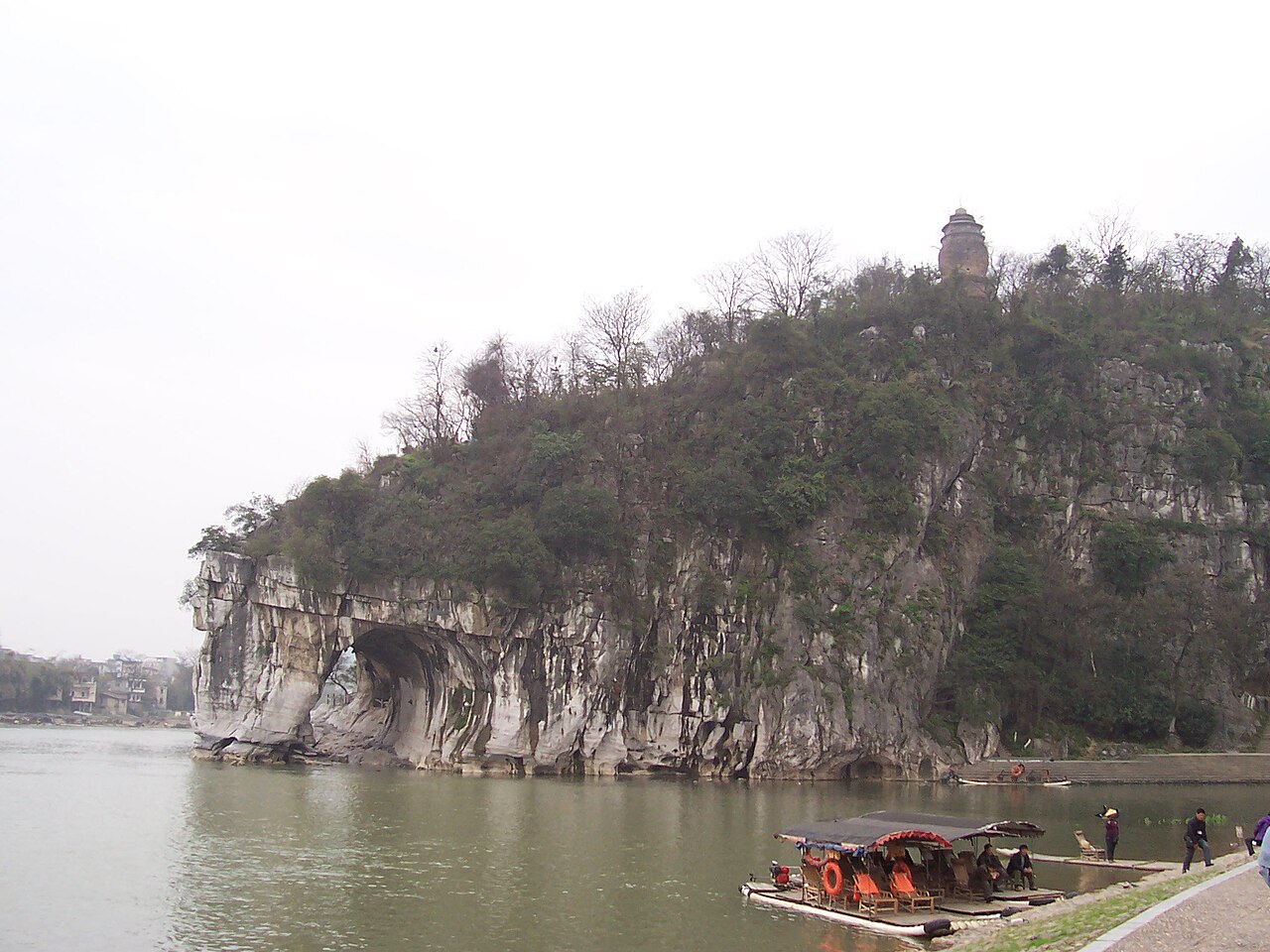
Elephant Trunk Hill is Guilin's most recognizable landmark — and for good reason. This limestone hill juts into the Li River, and a natural arch carved by centuries of water erosion creates the unmistakable shape of an elephant dipping its trunk to drink. It's the image that appeared on the cover of Chinese textbooks for decades.
The hill sits at the confluence of the Li River and Peach Blossom River, which is why the water around it is so calm and reflective. On a still morning, the reflection completes the "elephant" — trunk, body, and all. The best photo angle is from the south bank.
How to visit
The park has three entrances. Gate 3 (the main entrance) puts you closest to the classic viewing platform — the spot where every tourist photo is taken. Walk to the platform, take your shot, then continue to Gate 2, which exits directly onto Binjiang Road. If you want the elevated view, enter through Gate 1 and climb to the summit. There's a small pagoda up top and a panoramic look over the river and city. The climb takes about 15 minutes and is not strenuous.
Binjiang Road
Step out of Elephant Trunk Hill's Gate 2 and cross the street — you're on Binjiang Road, a tree-lined riverside promenade that runs along the Li River for several kilometers. Enormous banyan trees form a green canopy overhead. Local vendors sell roasted chestnuts and sugar cane. Elderly residents practice tai chi by the water. The karst skyline stretches ahead of you like a painting that never ends.
Binjiang Road connects Elephant Trunk Hill to the Twin Towers area, so you're covering real ground while enjoying the scenery. The walk is flat, paved, and shaded — ideal for early morning or late afternoon.
What to watch for
The section between Elephant Trunk Hill and the Twin Towers is the most scenic. Look for the "Mountain and River and Moon" stone carving — a popular photo spot. If you're visiting in the early morning, you'll see locals jogging, dancing, and playing chess along the riverbank. It's a window into daily Guilin life that most tourists miss.
Sun and Moon Twin Towers ¥35 to climb
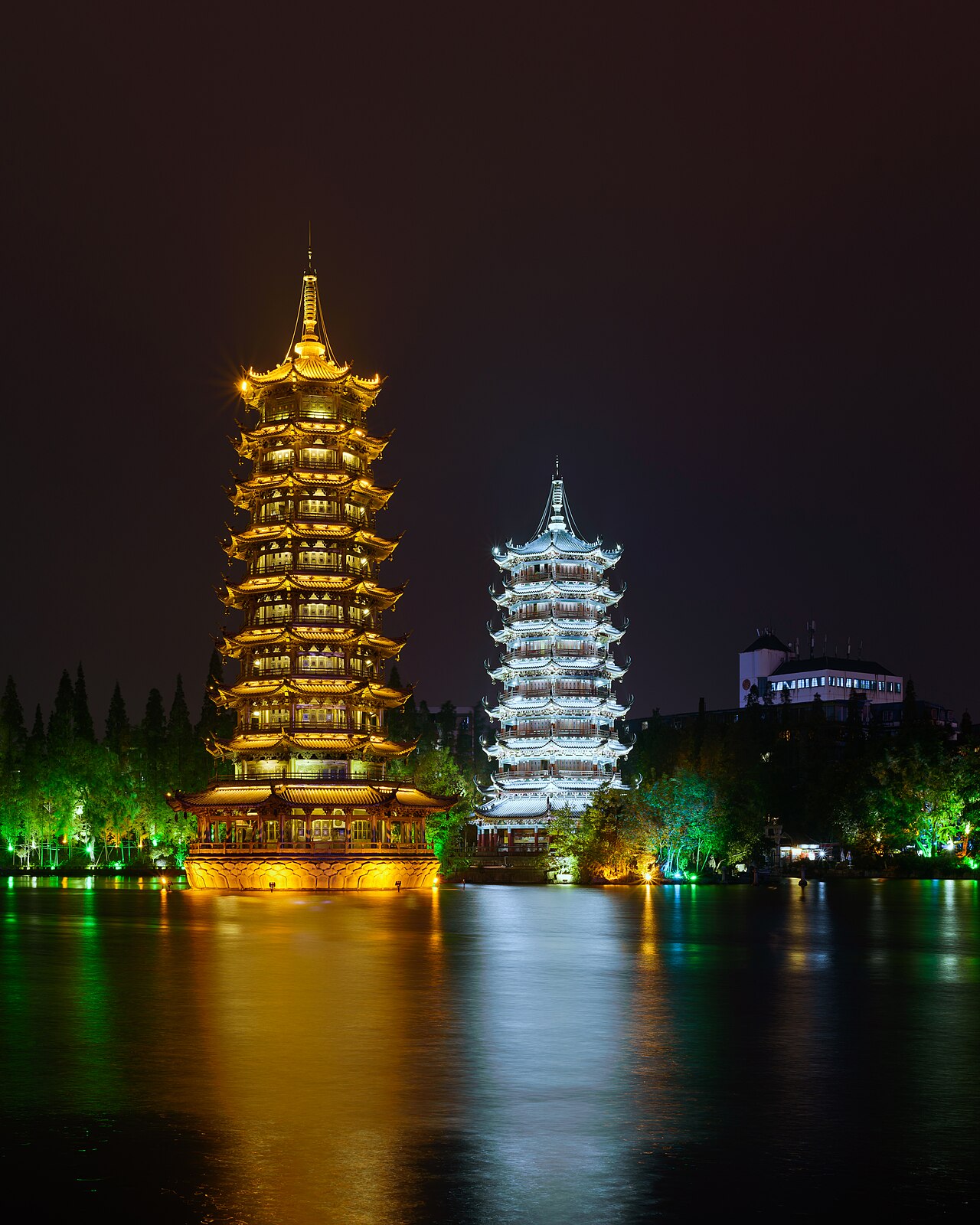
The Sun and Moon Twin Towers are Guilin's most photographed nighttime landmark — and one of the most photogenic pagoda pairs in all of China. They sit on an artificial island in the middle of Shanhu (Cedar) Lake, connected to the shore by a decorated bridge. At night, the entire scene lights up.
The Sun Tower is 41 meters tall and made entirely of copper — the tallest copper pagoda in the world. The Moon Tower is 35 meters, built with white glazed tile and dark wood. Inside the Sun Tower, there's a bronze Buddha statue and a spiral staircase to a 360-degree viewpoint.
Worth climbing?
The exterior view is the real show. Unless you're a pagoda enthusiast, save your energy and money — the towers look better from the outside. Walk around the lake, find a bench, and enjoy the reflection.
Zhengyang Pedestrian Street & East-West Alley
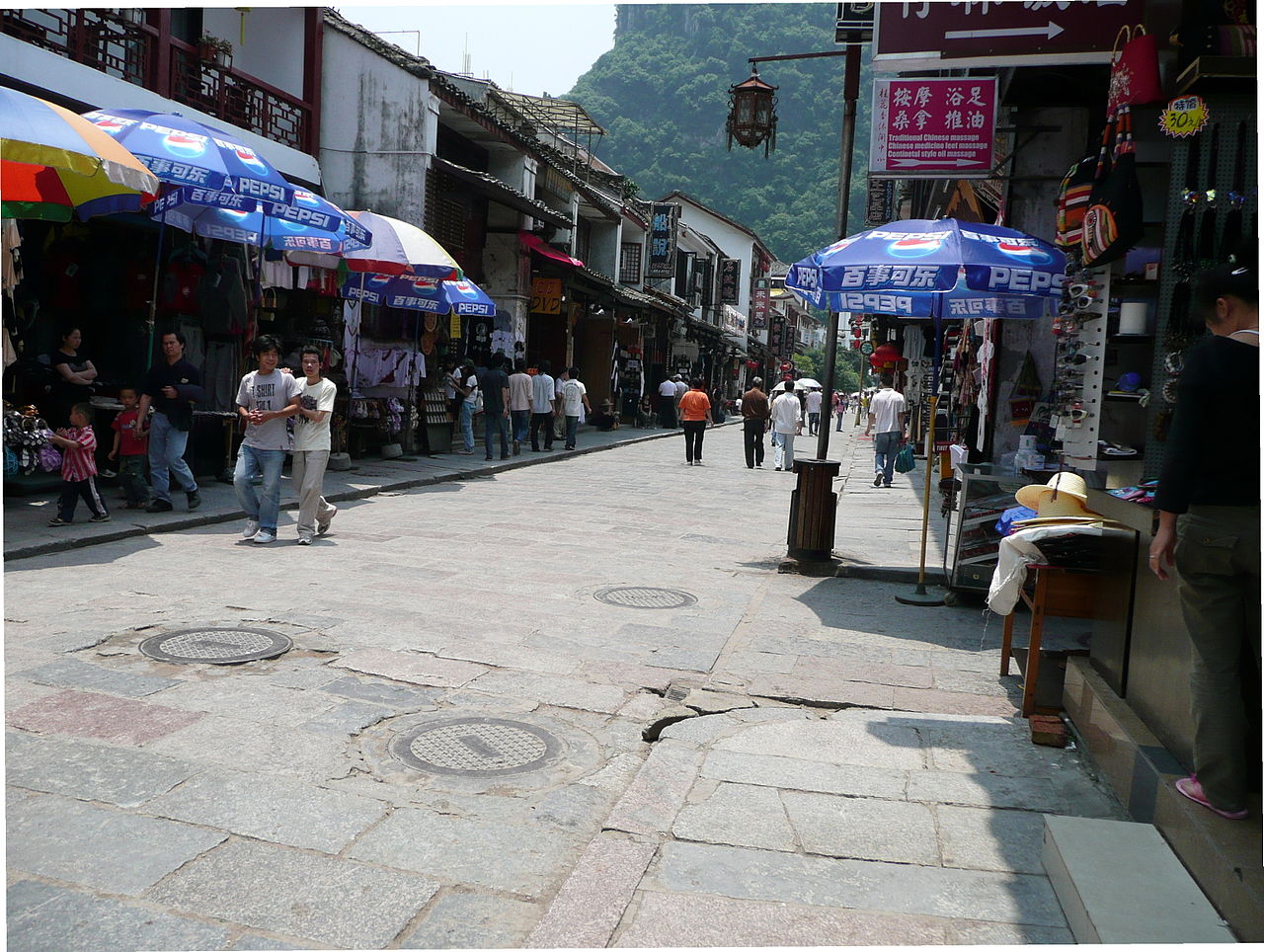
By now you've earned a meal — and Zhengyang Pedestrian Street is where Guilin comes to eat. This is the city's main food drag, a bustling strip packed with restaurants, snack vendors, and local specialties. The street runs parallel to the lake district and is always crowded. The air smells like grilled meat, chili oil, and fresh rice noodles.
What to eat
- 🍜 Guilin rice noodles (桂林米粉) The city's signature dish — thick round rice noodles served in a fragrant broth with pickled beans, braised beef, and chili oil. Every shop has its own recipe, and locals are fiercely loyal to their favorite. A bowl costs ¥8-15.
- 🐌 Stuffed river snails (田螺酿) A Guilin specialty. The snail meat is removed, mixed with pork and herbs, then stuffed back into the shell and braised in spicy sauce. Messy to eat, worth every finger.
- 🐟 Beer fish (啤酒鱼) Fresh river fish stewed in beer with tomatoes, peppers, and tofu. A signature dish of the Guilin-Yangshuo area.
- 🍵 Oil tea (油茶) A savory, slightly bitter tea soup fried with peanuts, scallions, and puffed rice. An acquired taste, but beloved by locals.
From Zhengyang Street, take the underground passage to reach East-West Alley (Dongxi Xiang). This restored Ming-Qing dynasty street is a different vibe — quieter, more photogenic, lined with indie boutiques, tea houses, and craft shops. The architecture is authentic old Guilin: whitewashed walls, dark timber frames, and narrow stone lanes.
Jingjiang Prince's Mansion ¥100
Most visitors to Guilin come for the natural scenery, but Jingjiang Prince's Mansion is a reminder that this city has serious historical depth. Built in 1372 during the Ming Dynasty, this was the official residence of the Prince of Jingjiang — one of the most powerful regional rulers in southern China. The complex predates Beijing's Forbidden City by more than 30 years, making it one of the oldest surviving palace compounds in China.
Inside, you'll find a stone city wall with watchtowers, the grand Chengyun Gate, and a series of courtyards, halls, and gardens. The most photogenic spot is the long red-walled corridor — a narrow alley between high crimson walls that creates dramatic light and shadow, especially in the late afternoon. It's one of the most Instagrammable spots in Guilin.
The "Cloud Stairway" (云阶)
A steep stone staircase that climbs through the complex, flanked by old trees and moss-covered walls. The name comes from the fact that it seems to climb into the clouds — in reality, it leads to the top of a small hill with a view over the entire mansion and the city beyond.
Guihai Qinglan ¥30
Guihai Qinglan (桂海晴岚) is Guilin's hidden countryside — a scenic park about 20 minutes by taxi from downtown that feels like stepping into a Chinese landscape painting. The name translates roughly to "sea of laurel mist," and on a foggy morning, it lives up to the poetry. Open meadows stretch toward a mirror-still lake. Karst peaks rise in every direction. Black swans glide across the water. There are even lambs you can feed near the entrance.
The park is surprisingly spacious and uncrowded, even on weekends. Most tourists stick to the main lake area, but the walking paths extend deep into the park, passing through bamboo groves, over stone bridges, and along the base of the limestone peaks.
What makes it special
Unlike Guilin's more famous attractions, Guihai Qinglan doesn't feel commercialized. There are no souvenir shops or food vendors cluttering the paths. It's just nature — clean, quiet, and beautiful.
Chuanshan Park ¥30
Chuanshan Park is where Guilin locals go to hike, relax, and watch the sunset. It's a 10-minute taxi ride from the city center, and while it's not as famous as Elephant Trunk Hill, many Guilin residents consider it the city's best-kept secret.
The main attraction is the hike to the summit. The trail takes about 25 minutes and winds through dense subtropical forest before emerging onto exposed rock near the top. Halfway up, you'll pass through a massive natural tunnel — a hole through the mountain that funnels cool wind and offers a framed view of the city below.
The cave cafes
Near the summit, two cafes are built directly into the rock face. One is a cave café — you sit inside a natural limestone cavern, drinking coffee while looking out over the karst landscape. It sounds gimmicky, but it works. The combination of cool cave air and panoramic views is genuinely relaxing.
The sunset
The summit faces west, making it the best sunset viewpoint in Guilin's city center. On a clear evening, you'll watch the sun drop behind a jagged line of karst peaks while the sky turns orange and pink. Arrive by 5:30-6:00 PM in summer, 4:30-5:00 PM in winter.
Suggested Itinerary
Here's how to fit all of this into a single day without feeling rushed:
Morning (8:00 AM – 12:00 PM)
- 8:00 — Elephant Trunk Hill. Arrive early to beat the crowds and get the best light.
- 8:45 — Walk Binjiang Road toward the Twin Towers.
- 9:15 — Sun and Moon Twin Towers. Walk around the lake.
- 9:45 — Zhengyang Pedestrian Street. Early lunch — try Guilin rice noodles.
- 10:30 — East-West Alley. Browse the shops, grab a tea or coffee.
Afternoon (12:00 PM – 5:00 PM)
- 12:00 — Jingjiang Prince's Mansion. Explore the grounds, find the red-walled corridor.
- 1:30 — Lunch break. Return to Zhengyang Street for beer fish or stuffed snails.
- 2:30 — Guihai Qinglan OR Chuanshan Park (pick one based on your energy).
- 4:30 — If you chose Chuanshan Park, start the sunset hike.
Evening (5:00 PM onward)
- 5:30 — Sunset from Chuanshan Park summit.
- 7:00 — Return to Twin Towers area for the nighttime light show.
- 8:00 — Dinner on Zhengyang Street. Try beer fish or oil tea.
If you're short on time: Skip Guihai Qinglan and the Chuanshan hike. Stick to the core loop — that's a solid 5-6 hour day on its own.
Practical Tips
- Budget: Total for the full day under ¥200 (~$28) per person, not including food. Free stops: Elephant Trunk Hill, Twin Towers exterior, Binjiang Road, East-West Alley.
- Footwear: Comfortable walking shoes are non-negotiable. You'll cover 10+ km, and Chuanshan involves uneven stone steps.
- Getting around: The core route is entirely walkable. Guihai Qinglan and Chuanshan Park each need a short taxi ride (¥15-30 each way). Use DiDi (China's Uber) or hail a street cab.
- Food timing: Zhengyang Street gets crowded 11:30 AM–1:30 PM and 5:30–7:30 PM. Eat slightly off-peak.
- Cash vs. digital: Most vendors accept WeChat Pay or Alipay. Without Chinese payment apps, bring some cash — small vendors often can't process international cards.
- Weather: Hot and humid May–September (30-35°C). October-November is most comfortable. March-April brings rain and mist — great for photography.
- Language: English is limited outside major hotels. "多少钱" (duōshǎo qián) = "How much?" and "谢谢" (xièxie) = "Thank you" will get you far.
- Safety: Guilin is extremely safe. Petty crime is rare. The only practical reminder: tap water is not drinkable; buy bottled water anywhere for ¥2-3.
Sources & References
- 五一桂林旅游必看攻略 — 李不麋鹿 (Xiaohongshu, Apr 2026)
- 阳朔 2 天 1 夜|玩转桂林山水天花板保姆级攻略 — 假日出逃 (Xiaohongshu, May 2026)
- 桂林三天两夜旅游攻略手绘地图 — 墨诚 Ai 设计 (Xiaohongshu, May 2026)
- Photo: Elephant Trunk Hill — Wikimedia Commons (CC)
- Photo: Sun and Moon Twin Towers — Wikimedia Commons (CC)
- Photo: Li River karst panorama — Wikimedia Commons (CC)
- Photo: Misty karst landscape — Wikimedia Commons (CC)