
Xi'an is not just a city. It is the starting point of the Silk Road, the capital of thirteen Chinese dynasties, and the home of the most astonishing archaeological discovery of the 20th century. For over 1,100 years, this was the largest city in the world — larger than Constantinople, larger than Baghdad, larger than Rome at its peak. Today, Xi'an gives you the Terracotta Warriors, the Ming Dynasty City Wall, the Muslim Quarter's sizzling street food, and Mount Hua's death-defying plank walk — all in one trip.
This 8-day guide covers the full Xi'an experience: three days of ancient history, two days of Tang Dynasty nightlife, a day on China's most dangerous mountain, and an optional day at the Yellow River's thunderous Hukou Waterfall. Budget from ¥3,500 (~$480) per person. All ticket prices, transport routes, and insider tips verified against Ctrip 2026 data.
Why Xi'an
Xi'an (西安), formerly known as Chang'an (长安), served as China's capital under the Zhou, Qin, Han, Sui, and Tang dynasties — thirteen in total. The Silk Road began here. Buddhism entered China through here. The world's first million-person city was here. UNESCO ranks Xi'an alongside Athens, Rome, and Cairo as one of the Four Great Ancient Capitals of the World.
Today, Xi'an combines ancient and modern with a confidence few cities can match. Ctrip data ranks Xi'an among the top 3 global must-visit destinations for 2026. The Terracotta Warriors, City Wall, and Grand Tang Dynasty Ever-Bright City all feature on night-tourism must-see lists.
Before You Go: Tickets & Seasons
Best Seasons
- Spring (Mar–May) & Autumn (Sep–Nov): 15–25°C, ideal for outdoor activities. Mount Hua's spring blossoms and autumn foliage are spectacular.
- Summer (Jun–Aug): Up to 35°C. Avoid midday — do the City Wall at sunset and Muslim Quarter after dark.
- Winter (Dec–Feb): 0–10°C, few tourists. Mount Hua snowscapes are stunning but some cable cars may close.
⛔ Critical Ticket Reservations
- Terracotta Warriors (¥120): Official WeChat mini-program "秦始皇帝陵博物院". Book 3–7 days ahead in peak season.
- Shaanxi History Museum (FREE): Official WeChat. Book 7 days ahead — slots gone within minutes in peak season.
- Mount Hua (¥160): Official WeChat "华山景区". Book cable car + entry combo tickets.
- Song of Everlasting Sorrow show (¥239–988): Book 3 days ahead. Sells out in peak season.
Day 1: Bell Tower, Drum Tower & Muslim Quarter
Afternoon: Bell Tower & Drum Tower ¥50 combo
The Bell Tower (built 1384) is China's largest and best-preserved bell tower. Climb up for a 360° view of Xi'an's chessboard city layout — four main avenues radiating perfectly from the center. The Drum Tower (built 1380, just 200m away) marks the northern entrance to the Muslim Quarter. Combo ticket ¥50, open 8:30–21:30.
Evening: Muslim Quarter Food Crawl
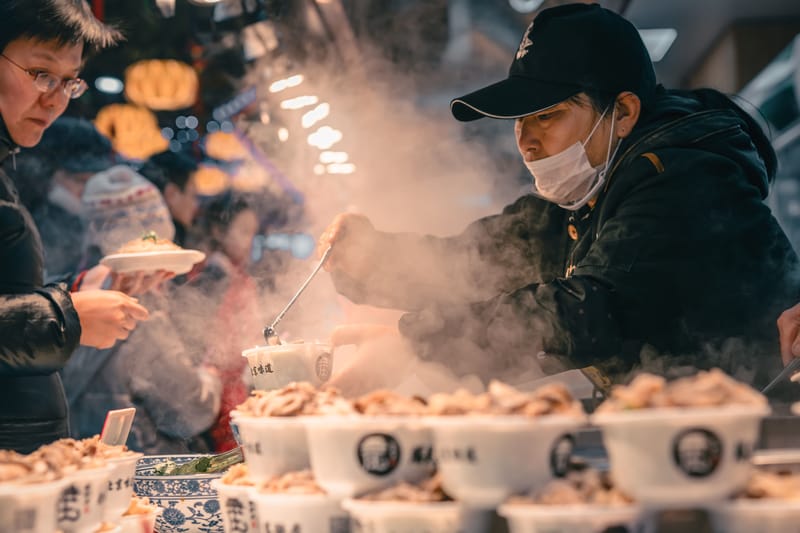
The Muslim Quarter (回民街) is not one street but a neighborhood of interlocking lanes — Beiyuanmen, Beiguangji Street, Xiyang Market, Dapiyuan. It has been Xi'an's Hui Muslim community center for over a thousand years, ever since Persian and Arab traders settled here during the Tang Dynasty.
Eat: Roujiamo at Fanji (樊记), Yangrou Paomo at Laosunjia (老孙家), Biangbiang noodles at Laowan (老碗), soup dumplings at Jiasan (贾三). Pro tip: The main Beiyuanmen street is touristy and overpriced. Walk deeper into Xiyang Market and Dapiyuan for the real flavors at half the price.
Days 2–3: Terracotta Warriors, Huaqing Palace & City Wall
Day 2 Morning: Terracotta Warriors ¥120
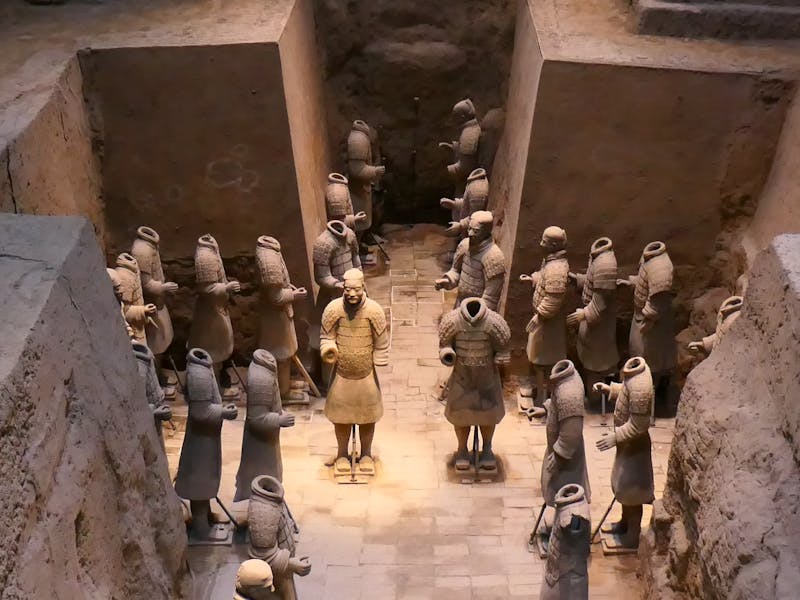
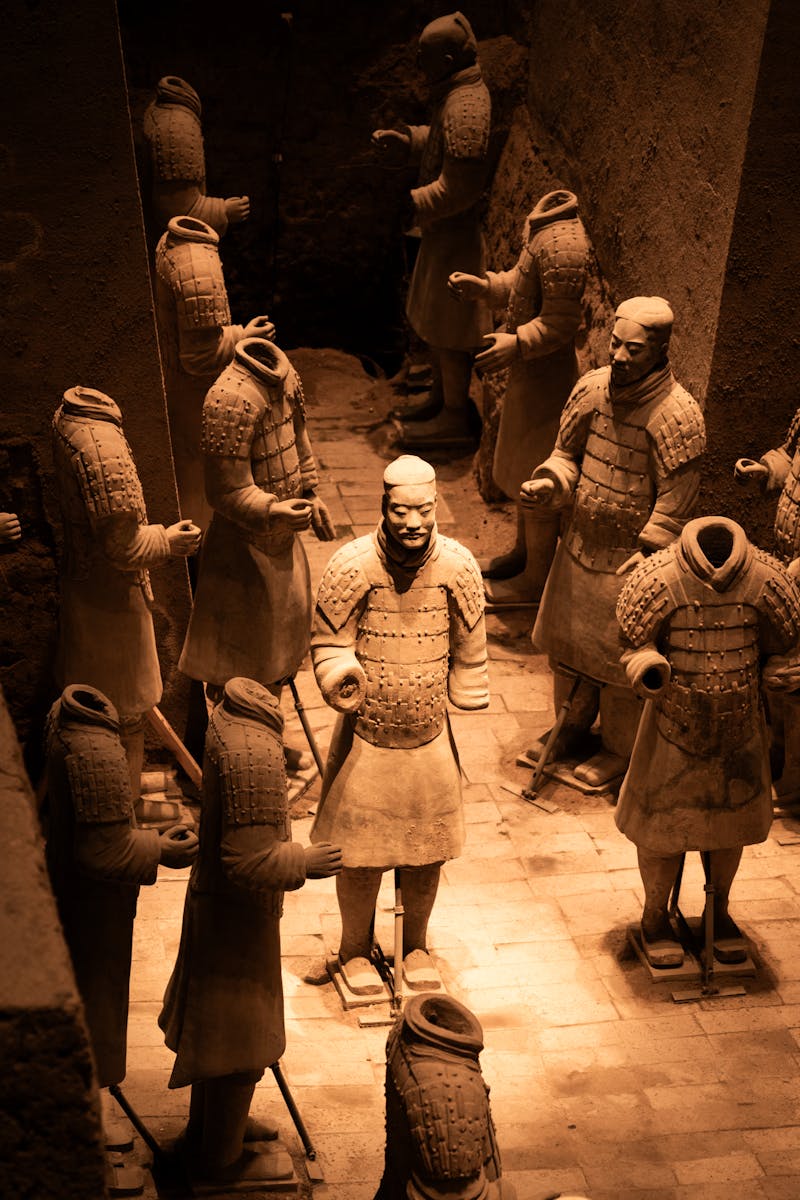
Located 40 km east of Xi'an in Lintong District, the Terracotta Army was discovered in 1974 by farmers digging a well. Three pits have been excavated, yielding over 8,000 warriors, 100+ chariots, and 400+ horses. Visit order: Pit 1 (largest, 6,000 warriors) → Pit 3 (command center) → Pit 2 (mixed units) → Exhibition Hall (bronze chariots). Allow 3–4 hours.
Don't miss: The bronze chariots (青铜之冠) — two life-sized bronze chariots with 3,000+ individually cast pieces, each gilded and painted. The kneeling archer (跪射俑) — the only completely intact warrior found, with original paint still visible on close inspection.
Day 2 Afternoon: Huaqing Palace ¥120
At the foot of Mount Li, Huaqing Palace was the Tang Dynasty's imperial hot spring resort. Emperor Xuanzong built it for his beloved concubine Yang Guifei. Here, in December 1936, Zhang Xueliang and Yang Hucheng arrested Chiang Kai-shek in the Xi'an Incident — a turning point that reshaped modern Chinese history. Visit the Five-Room Hall (where Chiang was held) and the imperial bathing pools. Optional evening: Song of Everlasting Sorrow (长恨歌, ¥239–988) — a spectacular outdoor dance drama performed on the actual palace grounds with the mountain as backdrop.
Day 3: City Wall Cycling & Stele Forest
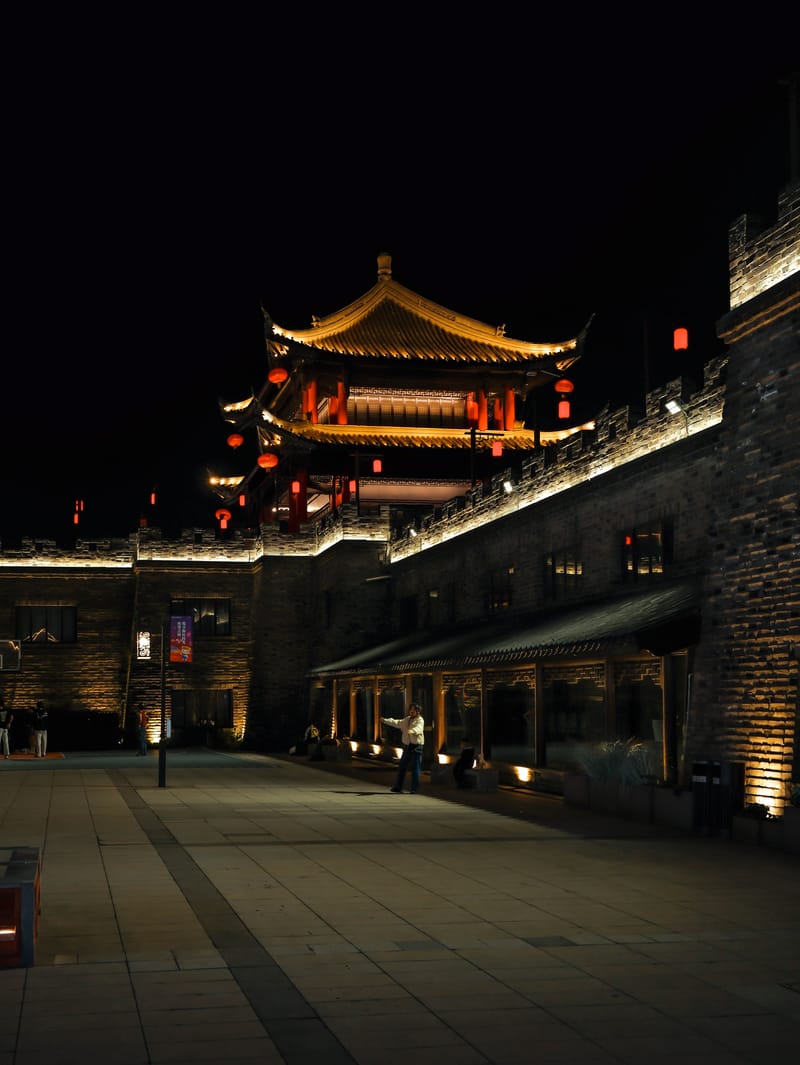
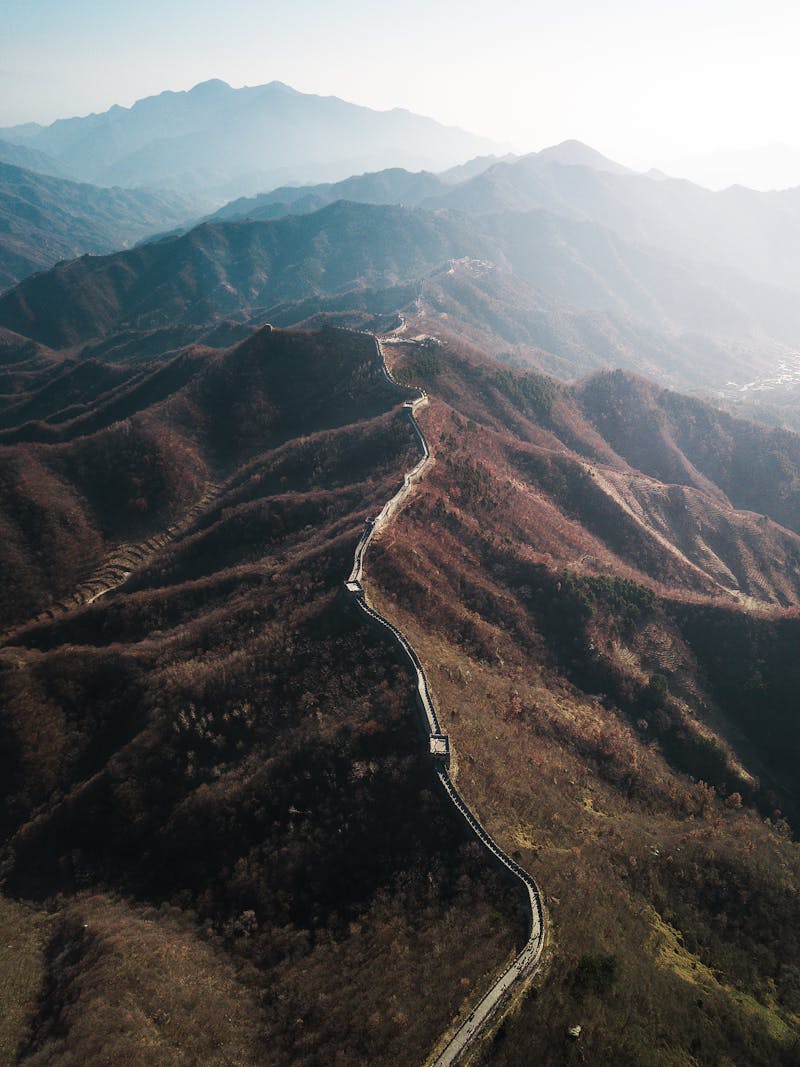
The Xi'an City Wall (¥54, bike ¥45/3h) is China's most complete ancient city fortification — 13.74 km circumference, 12m high, 15m wide at the top. Rent a bike at the South Gate (Yongning Gate) and cycle the full loop clockwise: South → East (Changle Gate) → North (Anyuan Gate) → West (Anding Gate) → South. Takes 1.5–2 hours.
Afternoon: Stele Forest Museum (¥30 peak / ¥10 off-peak) — China's oldest stone inscription museum, housing 3,000+ stelae. Masterpieces by Yan Zhenqing, Liu Gongquan, and Ouyang Xun. The Nestorian Stele (大秦景教流行中国碑, 781 AD) is one of the most important archaeological discoveries in Christian history — documenting the arrival of Nestorian Christianity in Tang China.
Days 4–5: Shaanxi History Museum, Big Wild Goose Pagoda & Tang Dynasty Nightlife
Day 4 Morning: Shaanxi History Museum Free
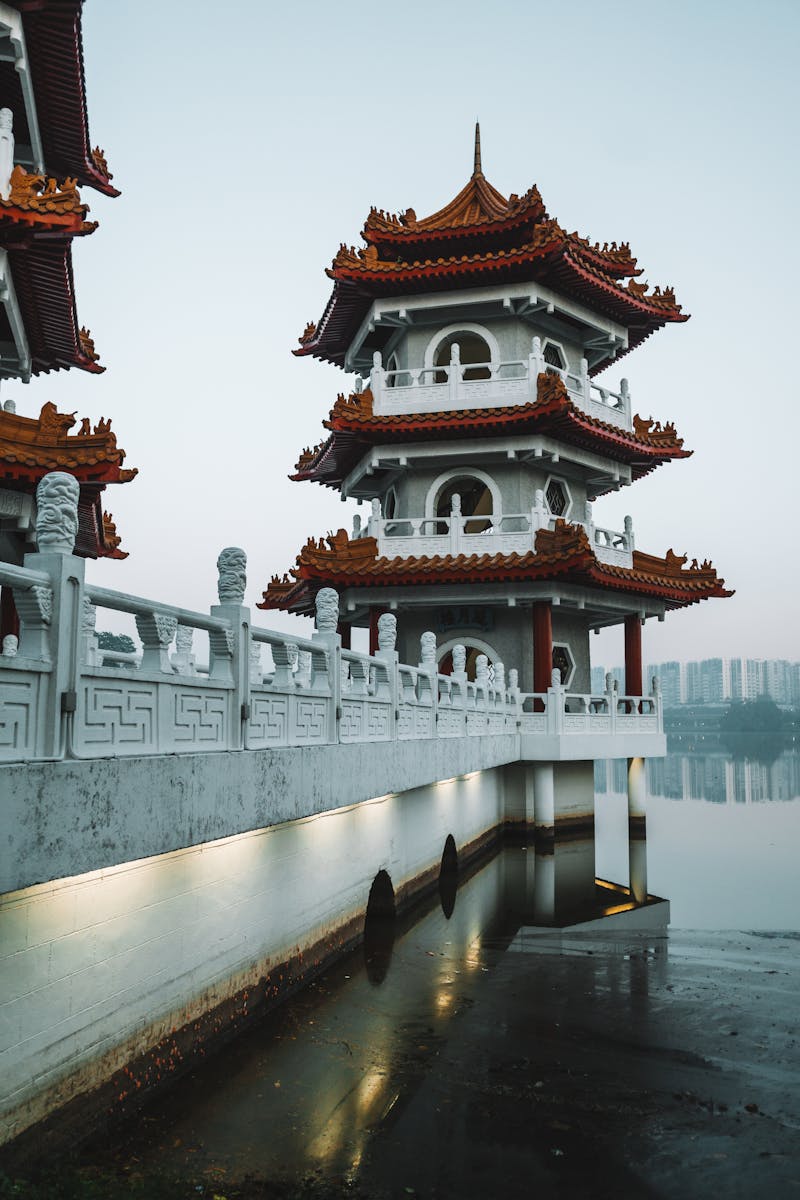
China's first large-scale modern national museum. 1.71 million artifacts, from Paleolithic stone tools to Qing Dynasty porcelain. Must-see treasures: Gilt Beast-Head Agate Cup (镶金兽首玛瑙杯 — Tang Dynasty, unique surviving example), Dancing Horse Silver Flask (舞马衔杯纹银壶), Empress's Jade Seal (皇后之玺 — Western Han, only surviving Han empress seal). Free but requires reservation. Closed Mondays. Allow 3–4 hours.
Day 4 Afternoon: Big Wild Goose Pagoda ¥40 + ¥30 climb
Built in 652 AD by the monk Xuanzang (玄奘) to house Buddhist scriptures brought from India. The 64m, seven-story pagoda is Tang Dynasty brick architecture at its finest. Climb to the top for a panoramic view of modern Xi'an. At dusk, the North Square musical fountain — Asia's largest at 350m × 110m — performs nightly at 8:00 PM. Free.
Day 5: Tang Dynasty Nightlife
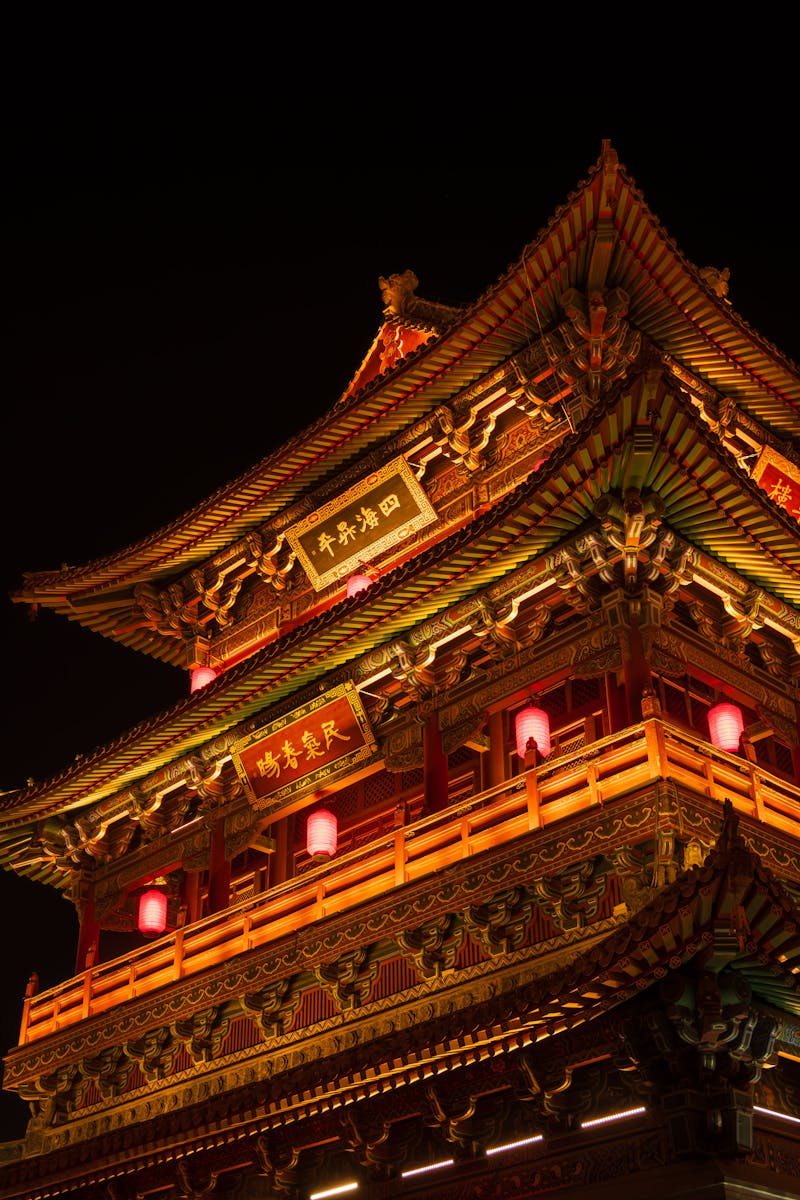
Morning: Shuyuanmen Cultural Street — a Ming-Qing style lane near the South Gate, lined with calligraphy shops, inkstone dealers, and Guanzhong Academy (Ming-Qing era's top Shaanxi school). Afternoon free. Evening (the main event): Grand Tang Dynasty Ever-Bright City (大唐不夜城, free) — a 2.1 km Tang-style pedestrian boulevard south of Big Wild Goose Pagoda. Tang Dynasty sculptures of Li Bai, Du Fu, and Bai Juyi. Street performers in Tang costumes. The viral "Tumbler Lady" performance. Best time: 6:00–10:00 PM when the lights are on. Optional: Tang Paradise (大唐芙蓉园, ¥120) — a 1,000-mu Tang Dynasty theme park with water-screen movies and night shows.
Days 6–7: Mount Hua & Hukou Waterfall
Day 6: Mount Hua — China's Most Dangerous Hike ¥160
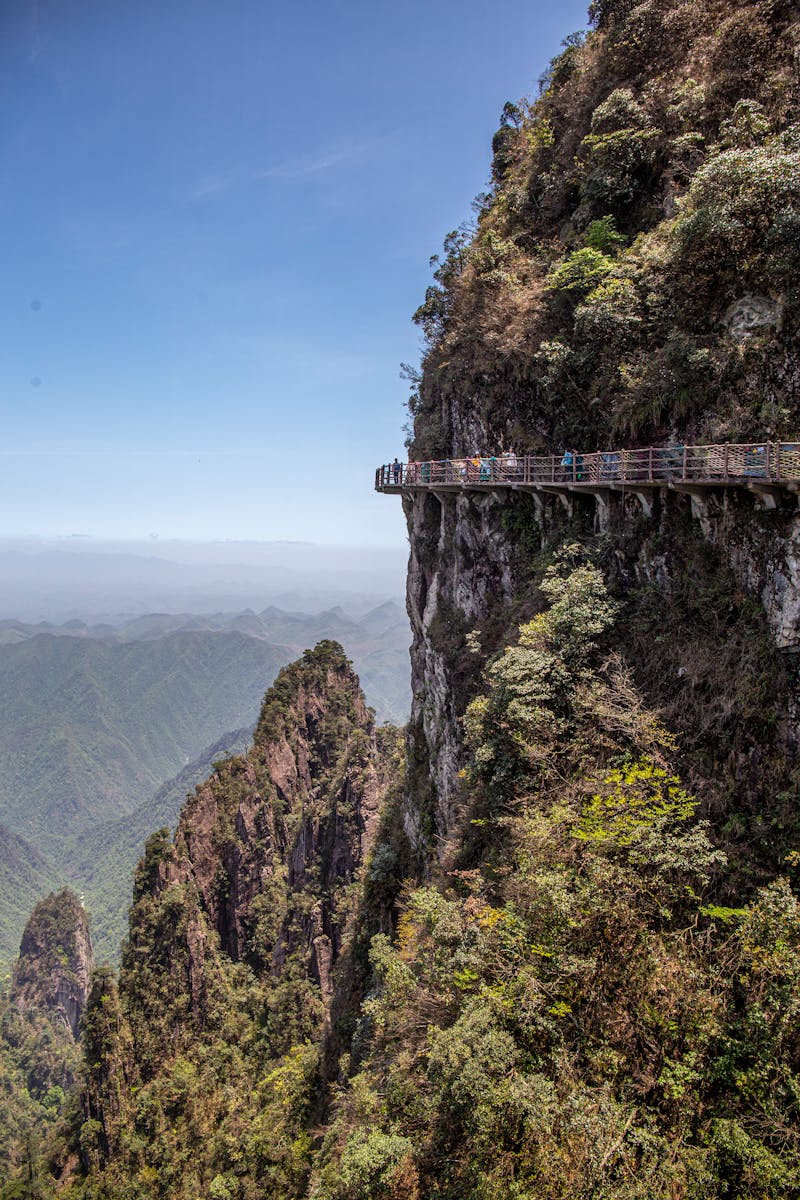
Mount Hua, 120 km east of Xi'an in Huayin City, is one of China's Five Great Mountains, known for sheer granite cliffs and death-defying trails. Five peaks: East (sunrise), South (highest, 2,154.9m), West (lotus-shaped rock), North, and Central.
Recommended route — West up, North down (easiest): 7:00 AM HSR Xi'an → Huashan North (30 min, ¥54.5). 8:30 AM shuttle bus to West Cable Car station. 9:30 AM West Cable Car (¥140, 20 min ride). 10:00 AM–1:00 PM: West Peak → South Peak (highest) → Central Peak → East Peak → North Peak. 2:00 PM North Cable Car down (¥80). 4:00 PM return to Xi'an. Total budget: ¥160 entry + ¥140 West cable + ¥80 North cable + ¥40 shuttle = ~¥420.
Thrill-seeker add-ons (¥30 each): Plank Walk in the Sky (长空栈道, South Peak) — wooden planks bolted to a vertical cliff, 30 cm wide. Safety harness provided. Sparrow Hawk Flip (鹞子翻身, East Peak) — vertical descent on iron chains. Not for the faint-hearted.
Day 7: Option A — Mount Hua Day 2 (Sunrise)| Option B — Hukou Waterfall ¥100
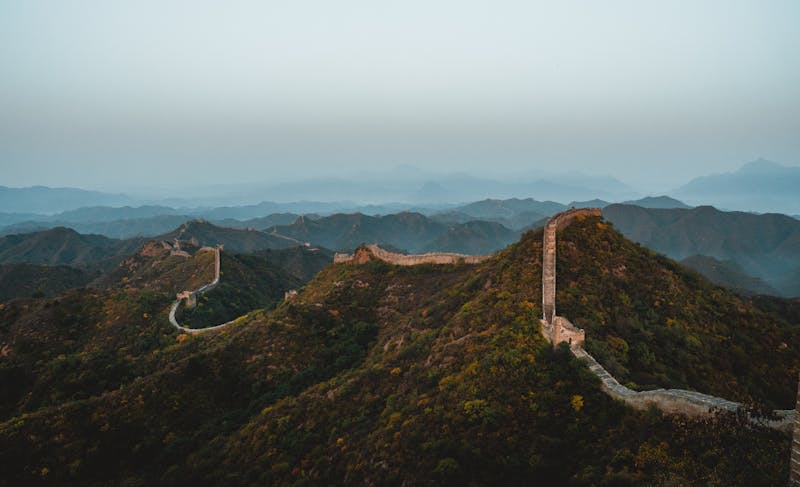
Option A — Mount Hua sunrise: Stay overnight at a summit guesthouse (¥300–800/room or ¥100–200/bunk). Sunrise from East Peak's Chaoyang Platform around 5:30 AM (summer).
Option B — Hukou Waterfall (壶口瀑布): China's second-largest waterfall and the world's largest yellow waterfall. The Yellow River, normally 300m wide, squeezes into a 30m-wide gorge and drops 20m with thunderous force. Best in April–May (spring melt flood) and September–October (autumn flood). Getting there: Bus from Xi'an East Bus Station to Yichuan (4h, ¥80), then transfer to Hukou (1h, ¥20). Or join a day-trip tour group.
Day 8: Small Wild Goose Pagoda, Last Bites & Souvenirs
Morning: Small Wild Goose Pagoda (free) — Tang Dynasty, 43m, 15 stories. Famous for surviving three major earthquakes that split and miraculously re-closed the tower. The adjacent Xi'an Museum (free) has 110,000 artifacts focused on the city's urban history. Closed Tuesdays.
Final lunch: Yangrou Paomo at Laosunjia, Hulutou (pig intestine soup) at Chunfasheng, or Shuipen Yangrou at Chengcheng Chongbin. Souvenirs: Cured beef (Fanji, Laotongjia), De Maogong crystal cakes, Lintong pomegranates (autumn), Terracotta Warrior replicas from the museum shop.
Xi'an Food Guide
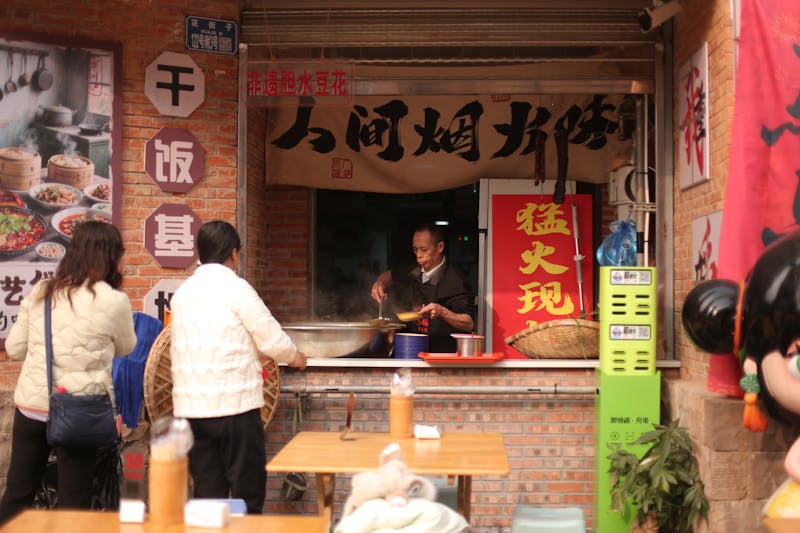
- 🥙 Roujiamo (肉夹馍) — China's original hamburger: braised pork in a crispy flatbread. Fanji (樊记), Ziwulu Zhangji, Qinyu. ¥10–20.
- 🍲 Yangrou Paomo (羊肉泡馍) — Tear flatbread into a bowl, then it's drowned in rich lamb broth. Laosunjia (老孙家), Tong Shengxiang (同盛祥). ¥30–50.
- 🍝 Biangbiang Noodles (biangbiang面) — Belt-wide noodles, chewy and satisfying. Laowan (老碗). ¥15–25.
- 🌶️ Oil-Splashed Noodles (油泼面) — Hot oil poured over chili flakes and garlic on wide noodles. The sizzle is the signature. Liuxiang Noodles. ¥12–18.
- 🥒 Liangpi (凉皮) — Cold skin noodles in chili-vinegar sauce. Wei's Liangpi (魏家凉皮), Sheng Zhiwang. ¥8–15.
- 🍚 Zenggao (甑糕) — Steamed glutinous rice with red dates, sweet and sticky. Southeast Asia Zenggao King. ¥10–15.
- 🐷 Hulutou (葫芦头) — Pig intestine soup with torn bread. Chunfasheng (春发生). ¥25–40.
- 🐑 Shuipen Yangrou (水盆羊肉) — Clear lamb soup with crescent flatbread. Chengcheng Chongbin. ¥25–35.
Getting Around
| Route | Mode | Duration | Cost |
|---|---|---|---|
| Xi'an city internal | Metro | — | ¥2–7/ride |
| Xi'an → Terracotta Warriors | Bus 306/307 | 1 hour | ¥7 |
| Xi'an → Mount Hua | HSR | 30 min | ¥54.5 |
| Xi'an → Hukou Waterfall | Bus | 4+1 hours | ¥80+¥20 |
| City Wall bike rental | Bicycle | 3 hours | ¥45 single |
Metro: 8 lines covering all major sites. Line 2 connects North Railway Station to city center. Line 4 connects South Station to Big Wild Goose Pagoda. Taxi: ¥9 flagfall + ¥2/km. DiDi works everywhere.
Budget Breakdown (8 Days, Per Person)
| Category | Budget | Mid-Range |
|---|---|---|
| Accommodation (7 nights) | ¥1,400 | ¥2,800 |
| Food (8 days) | ¥800 | ¥1,600 |
| Transport | ¥400 | ¥600 |
| Attractions & tickets | ¥900 | ¥1,400 |
| TOTAL | ¥3,500 (~$480) | ¥6,400 (~$880) |
Budget: hostels + street food + DIY transport. Mid-range: 3–4 star hotels + sit-down restaurants + cable cars on Mount Hua. Add ¥600–1,000 for Song of Everlasting Sorrow show tickets.
Practical Tips & Scams to Avoid
- Book everything ahead: Terracotta Warriors (3–7 days), Shaanxi History Museum (7 days, free but slots vanish instantly), Mount Hua cable cars. There is no "same-day ticket" in peak season.
- Muslim Quarter: go deeper: Beiyuanmen main street is touristy. Walk 5 minutes into Xiyang Market and Dapiyuan for authentic food at half the price.
- Terracotta Warriors "unofficial guides": Ignore anyone approaching you in the parking lot. Official guides are inside at the ticket counter.
- Mount Hua "shortcuts": Anyone offering a "shortcut" up the mountain is running a scam. Use the official cable cars or hiking trail.
- Big Wild Goose Pagoda "free photos": Photography is free, but they charge for prints — and the price is not low. Just take your own photos.
- Best photo spots: Terracotta Warriors — Pit 1 front panorama. City Wall — South Gate tower. Big Wild Goose Pagoda — North Square fountain. Grand Tang Dynasty — Kaiyuan Square light show. Mount Hua — West Peak Lotus Rock.