Temple
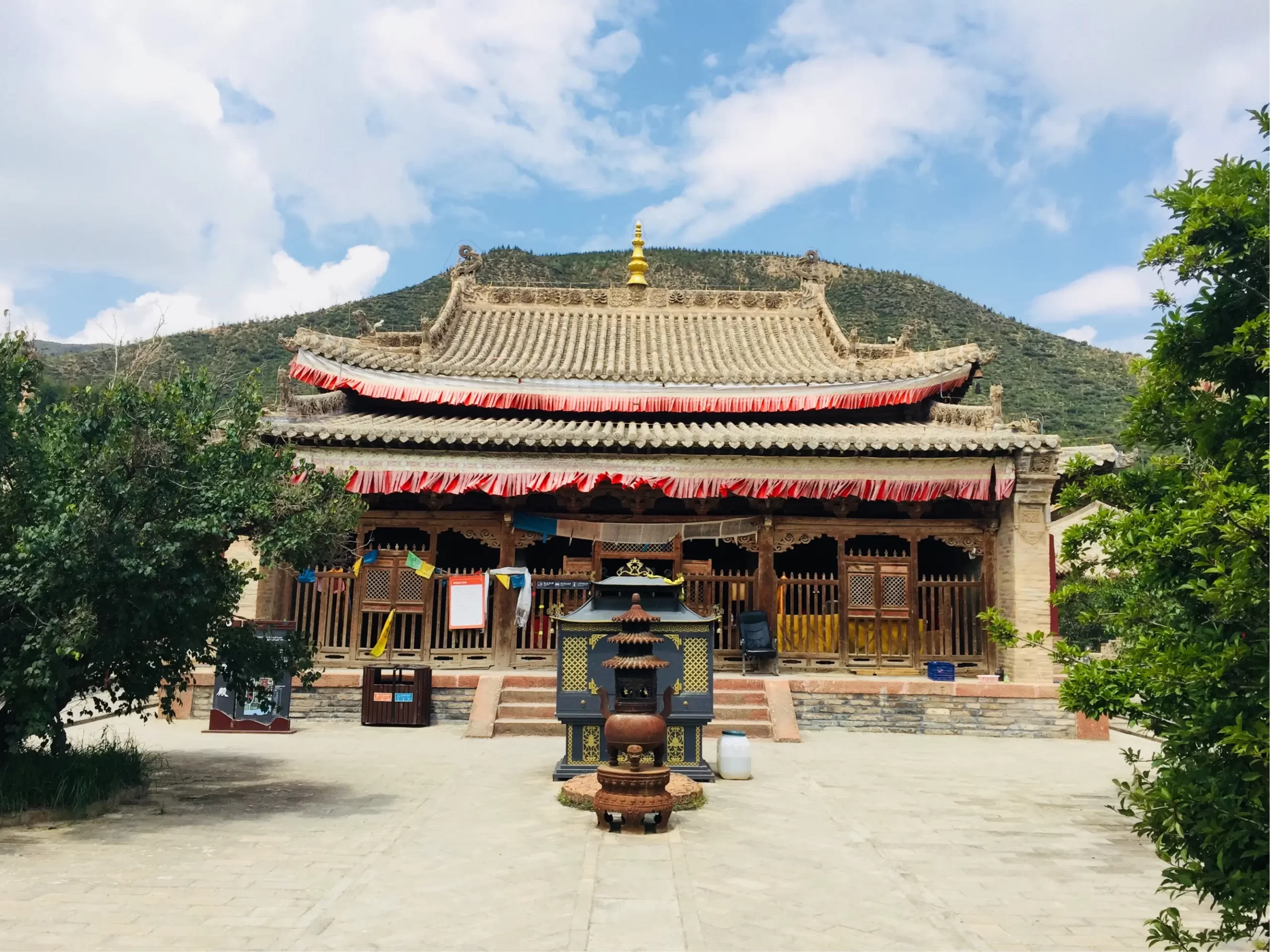
Kumbum Monastery (Ta'er)
One of the six great monasteries of Tibetan Buddhism's Gelug sect, founded in 1577. Famous for its butter sculpture murals, applique thangkas, and exquisite golden roofs.
8:00 AM - 6:00 PM
70 yuan
High-altitude capital of Qinghai province where Tibetan and Han cultures meet, gateway to the Qinghai-Tibet Plateau and the starting point of the legendary Silk Road's southern route.
Xining sits at 2,200 meters above sea level in the Huangshui River valley, surrounded by the dry, stark mountains of northeastern Qinghai. The air is thin, the sun intense, and the sky a piercing blue that feels closer than anywhere else in China.
The city has been a crossroads for centuries. Tibetan nomads descended from the grasslands, Hui merchants traveled the Silk Road, and Han settlers pushed westward from the interior. This convergence created Xining's distinctive character - a place where Tibetan Buddhist prayer flags flutter outside mosques, where yak meat shares street stalls with beef noodles, and where Mongol, Tu, and Salar peoples add their own threads to the cultural fabric.
Kumbum Monastery (Ta'er) is Xining's spiritual heart. Located 25 kilometers southwest, this sprawling complex of golden-roofed halls, white pagodas, and pilgrim-filled courtyards is one of Tibetan Buddhism's six great Gelug monasteries. The butter sculptures - intricate figures carved from colored yak butter - are unique to this monastery and must be seen to be believed.
The old Muslim quarter around Dongguan Grand Mosque pulses with energy. Narrow lanes overflow with halal food stalls, spice vendors, and tea houses. The mosque itself, built in Ming Dynasty style with Arabic calligraphy, accommodates thousands of worshippers and stands as a testament to Xining's multi-ethnic harmony.
For travelers, Xining is primarily a gateway - the launch point for journeys to Qinghai Lake, the world's second-largest saltwater lake, and for adventures deeper into the Tibetan Plateau. But the city itself rewards those who pause: the evening koras around Kumbum, the warmth of a clay bowl of yogurt, the view of snow mountains from the Beishan cliff temple.
Xining's recorded history spans over 2,100 years. During the Western Han Dynasty (206 BCE-24 CE), the central government established Xipingting, a military outpost guarding the Hexi Corridor and the route to the Western Regions. This made Xining one of China's earliest frontier commanderies on the Tibetan border.
The Song Dynasty renamed the settlement Xining in 1104, a name meaning "Western Peace." During the Ming and Qing, Xining developed as a key trading post on the southern Silk Road, connecting central China with Tibet, Xinjiang, and Central Asia. Tea, salt, and horses were the main commodities exchanged.
The city's modern transformation began in 1928 when Qinghai was established as a province with Xining as its capital. For much of the 20th century, Xining remained a relatively small, isolated highland town. The turning point came with the completion of the Qinghai-Tibet Railway in 2006, which linked Xining to Lhasa and integrated the city into China's national rail network.
Since 2010, Xining has undergone rapid urbanization. The Lanzhou-Xining High-Speed Railway (2017) reduced travel time to Lanzhou to under an hour. The city's population has doubled since 2000, and new districts have emerged on the valley floor, transforming a frontier garrison into a modern plateau capital.
Xining's economy is driven by three sectors: clean energy, tourism, and livestock products.
Qinghai province has China's richest solar and wind resources, and Xining is the administrative and industrial hub for the province's clean energy expansion. The city hosts manufacturing facilities for solar panels, lithium batteries, and wind turbine components. The surrounding mountains hold China's largest concentrated solar power stations.
Tourism is growing rapidly. Xining serves as the gateway to Qinghai Lake (3.5 million annual visitors), Kanbula National Forest Park, and the Qilian Mountains. Tibetan Buddhist pilgrimage tourism to Kumbum Monastery attracts both domestic and international visitors. The city received over 30 million tourists in 2024.
Highland livestock products remain economically important. Qinghai's yak and sheep products - meat, milk, cashmere, and leather - are processed and distributed from Xining. The city is also China's largest distribution center for caterpillar fungus (cordyceps), a prized ingredient in traditional medicine.
Xining's GDP reached 191.48 billion yuan in 2025, accounting for 47% of Qinghai's total economy.
Discover the culinary treasures of Xining, from traditional street food to imperial cuisine.
Xining Caojiabao Airport (XNN) - 56 domestic routes, 30 km from city center
Lanzhou-Xining High-Speed Railway (under 1 hour); Qinghai-Tibet Railway to Lhasa
Extensive bus and BRT network covering the city and suburbs
Available throughout the city
Spring (April-May) and Autumn (September-October) offer the best weather for most destinations in China.
At 2,200m, altitude sickness is possible. Take it easy on arrival, stay hydrated, and avoid alcohol.
Visit Kumbum Monastery early morning to see morning prayers and avoid crowds.
Xining has a large Muslim population. Most restaurants are halal. Look for halal signs.
The high altitude means strong UV. Wear sunscreen, sunglasses, and a hat even on cloudy days.
Discover more cities, food guides, and travel inspiration.